

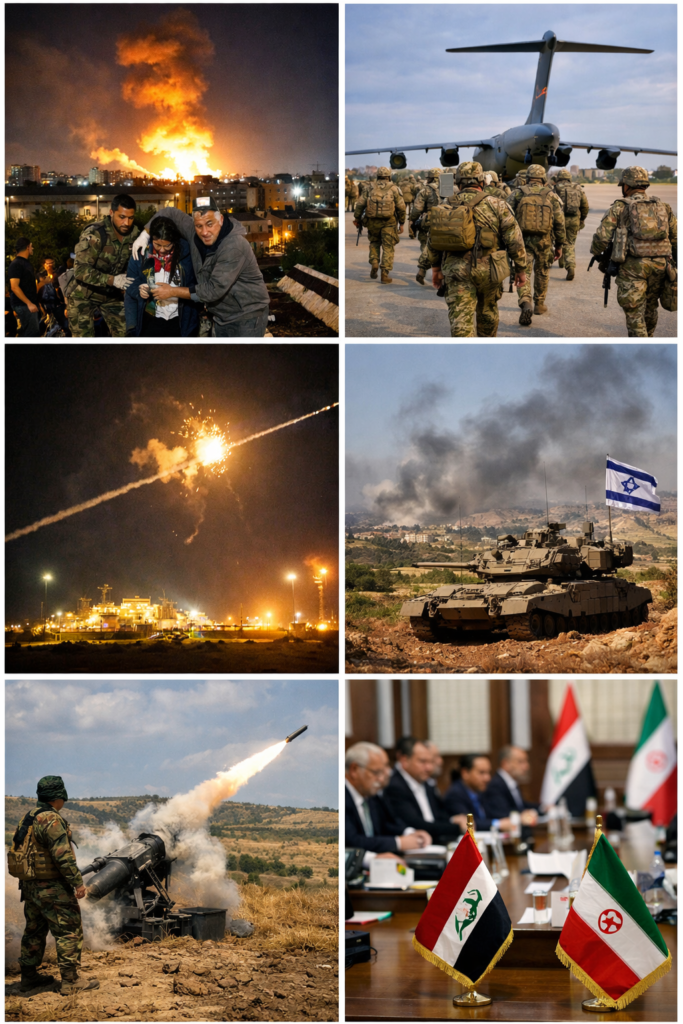
The conflict involving the United States, Israel, and Iran is continuing despite increasing efforts to find a diplomatic solution. There are mixed and sometimes conflicting reports about possible negotiations, which has created uncertainty about the future of the situation. At the same time, military actions such as airstrikes and missile attacks are taking place in Iran, Israel, and across the Gulf region. This conflict is also affecting global energy markets, especially due to concerns about disruptions in the Strait of Hormuz, an important route for oil transportation.
Situation in Iran
Military strikes by the United States and Israel are ongoing in Iran. In one recent attack in southern Tehran, at least 12 people were killed and 28 others were injured. Additional explosions in eastern Tehran reportedly caused the destruction of a school and several residential buildings.
There are also conflicting statements about negotiations. Some claims suggest that talks are underway and that Iran has agreed not to pursue nuclear weapons. However, Iran has long maintained that it does not intend to develop nuclear weapons and has consistently repeated this position over the years.
Reports indicate that a detailed peace plan has been presented to Iran in an effort to end the conflict. Despite this, people within Iran are experiencing confusion, as they hear about possible negotiations while still facing ongoing attacks. Analysts suggest that Iran wants to end the war on its own terms and ensure strong deterrence to prevent future conflicts.
Iran has also stated that non-hostile ships are allowed to pass through the Strait of Hormuz, aiming to maintain stability in international trade routes.
Diplomatic Efforts
Several countries are encouraging dialogue to resolve the conflict peacefully. Pakistan has offered to host negotiations, while other global leaders have urged both sides to engage in discussions rather than continue fighting. These efforts highlight the importance of diplomacy in preventing further escalation.
Developments in the Gulf Region
The effects of the conflict have spread to other Gulf countries. In Kuwait, a drone attack struck a fuel tank at an international airport, causing a fire but no casualties.
Saudi Arabia has successfully intercepted multiple drones and a ballistic missile targeting its eastern region, which contains major oil facilities.
In Bahrain, attacks have led to casualties, including the death of a foreign civilian working with military forces.
Situation in the United States
The United States appears to be combining military action with diplomatic efforts. There are plans to deploy thousands of troops to the Middle East to support ongoing operations.
At the same time, some restrictions on Iranian oil have been eased due to global demand, although experts warn that this could weaken the effectiveness of sanctions.
Situation in Israel
Israel continues to face missile attacks from Iran and remains on high alert, with its defense systems actively intercepting threats.
The country has also announced plans to establish a security zone inside Lebanon as part of its operations against Hezbollah. Israeli officials have stated that military actions will continue until they achieve their strategic goals.
Lebanon and Iraq
The conflict has caused significant damage in Lebanon, where many people have been killed and injured. There are concerns that the situation could worsen if a ground invasion takes place, and evacuation orders have already been issued in some areas.
Hezbollah has responded by launching attacks on Israeli targets using rockets, artillery, and drones.
In Iraq, the government is facing challenges in balancing its relationships with both the United States and Iran. Following recent attacks, Iran-backed groups have been allowed to respond, and several operations against foreign military bases have been reported. The Iraqi government has also taken diplomatic steps by summoning representatives from both countries after recent incidents.