

Introduction
Ethereum (ETH) has long been considered the backbone of the cryptocurrency industry. While Bitcoin is often referred to as digital gold, Ethereum is widely recognized as the world’s leading blockchain platform for decentralized applications, smart contracts, decentralized finance (DeFi), NFTs, and Web3 innovation.
As we move through 2026, Ethereum continues to play a critical role in shaping the future of blockchain technology. Despite market volatility and increasing competition from newer blockchain networks, ETH remains the second-largest cryptocurrency by market capitalization and one of the most actively used digital assets in the world.
Investors, developers, and institutions are closely monitoring Ethereum’s progress as the network evolves and adoption continues to grow. This article explores Ethereum’s current market situation, key growth drivers, challenges, and future outlook.
Understanding Ethereum’s Importance
Ethereum is much more than a cryptocurrency.
Unlike Bitcoin, which primarily functions as a store of value and payment network, Ethereum provides a programmable blockchain that allows developers to build decentralized applications (dApps).
Thousands of blockchain projects rely on Ethereum’s infrastructure, including:
- Decentralized Finance (DeFi) platforms
- NFT marketplaces
- Web3 applications
- Blockchain games
- Stablecoins
- Tokenized assets
This broad ecosystem has helped Ethereum maintain its position as one of the most valuable blockchain networks globally.
Ethereum’s Current Market Situation
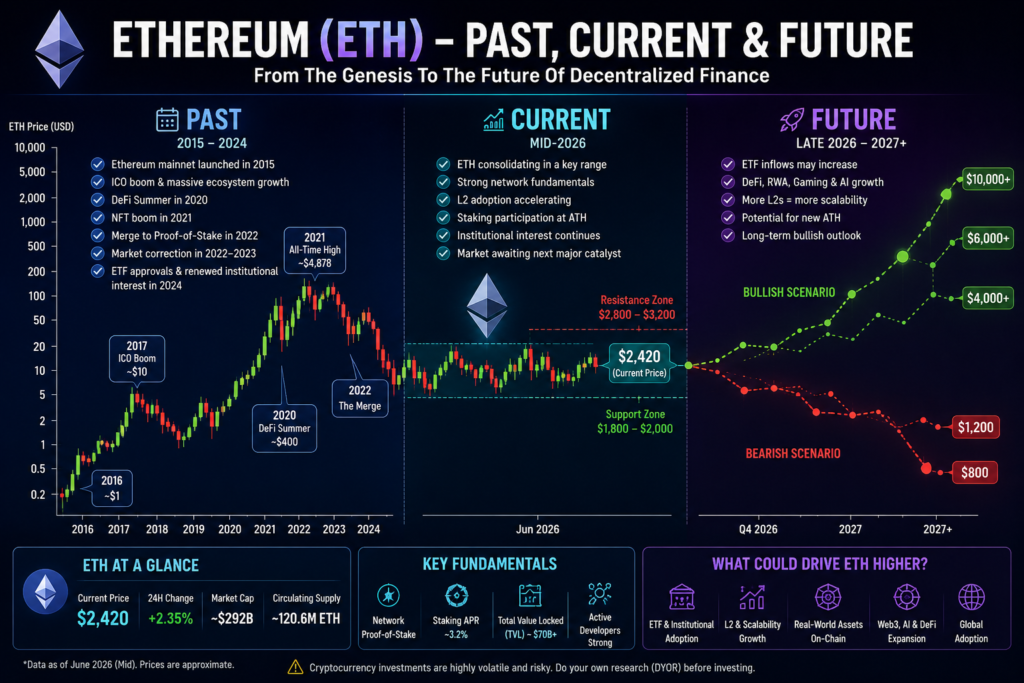
The Ethereum market in 2026 is experiencing a period of consolidation after significant price movements in previous years.
While short-term price fluctuations continue, Ethereum remains supported by strong fundamentals, active development, and growing institutional interest.
Several factors currently influence ETH’s price:
Market Sentiment
Cryptocurrency markets remain sensitive to economic news, interest rate decisions, and investor sentiment.
As a result, Ethereum often experiences sharp movements alongside Bitcoin and other major cryptocurrencies.
ETF Developments
Ethereum Exchange-Traded Funds (ETFs) have increased accessibility for traditional investors.
Growing ETF participation has helped improve market liquidity and attract new institutional capital into the Ethereum ecosystem.
Network Growth
Despite temporary market corrections, Ethereum continues to process millions of transactions and maintain one of the largest blockchain ecosystems in the industry.https://afmnews.net/bitcoin-in-2026-current-market-situation-key-challenges-and-what-investors-should-expect-next/
The Impact of Ethereum’s Proof-of-Stake Model
One of Ethereum’s biggest milestones was its transition from Proof-of-Work (PoW) to Proof-of-Stake (PoS).
This transformation significantly changed how the network operates.
Benefits of Proof-of-Stake
Improved Energy Efficiency
Ethereum now consumes dramatically less energy than before, making it more environmentally friendly.
Enhanced Security
Validators help secure the network by staking ETH, creating strong incentives for honest participation.
Staking Rewards
ETH holders can earn rewards by participating in network validation.
This feature has attracted long-term investors looking to generate passive income from their holdings.
The success of Proof-of-Stake remains one of Ethereum’s strongest competitive advantages.
Ethereum and the Growth of DeFi
Decentralized Finance, commonly known as DeFi, continues to be one of Ethereum’s most important use cases.
DeFi platforms allow users to:
- Borrow funds
- Lend assets
- Earn yield
- Trade cryptocurrencies
- Access financial services without traditional banks
Ethereum remains the dominant blockchain for DeFi applications.
Billions of dollars remain locked across Ethereum-based protocols, demonstrating strong user confidence in the network.
As global interest in decentralized financial systems grows, Ethereum is likely to remain a major beneficiary.
The Role of Ethereum in Web3
Web3 represents the next generation of the internet, where users have greater control over their data, identity, and digital assets.
Ethereum serves as the foundation for many Web3 projects.
Popular Web3 applications include:
Decentralized Social Platforms
Users control their content and identities.
Blockchain Gaming
Players can own and trade in-game assets.
Digital Identity Systems
Individuals maintain ownership of personal information.
Decentralized Marketplaces
Buyers and sellers interact directly without centralized intermediaries.
As Web3 adoption expands, Ethereum’s importance could continue growing.
Institutional Interest in Ethereum
Institutional adoption is no longer limited to Bitcoin.
Major financial institutions are increasingly exploring Ethereum-based investments and services.
Reasons institutions are interested in Ethereum include:
Smart Contract Technology
Ethereum’s programmable blockchain creates opportunities far beyond simple payments.
Tokenization of Assets
Real estate, stocks, bonds, and other assets can potentially be represented on blockchain networks.
Growing Developer Ecosystem
Ethereum consistently attracts some of the most talented developers in the blockchain industry.
Long-Term Innovation Potential
Many institutions view Ethereum as a technology platform rather than merely a cryptocurrency.
This broader utility makes Ethereum attractive for long-term investment strategies.
Ethereum’s Biggest Challenges
Although Ethereum remains a market leader, several challenges continue to exist.
Competition from Other Blockchains
Networks such as Solana, Avalanche, Sui, and other emerging platforms continue competing for developers and users.
These networks often promote faster transaction speeds and lower fees.
Regulatory Uncertainty
Government regulations remain a major consideration for the entire cryptocurrency sector.
Future policy decisions could influence Ethereum’s adoption and market performance.
Market Volatility
Like all cryptocurrencies, Ethereum experiences significant price swings.
Investors must be prepared for short-term fluctuations.
Despite these challenges, Ethereum’s large ecosystem provides significant resilience.
Ethereum Price Predictions and Future Outlook
Predicting Ethereum’s exact future price is impossible.
However, many analysts remain optimistic due to several long-term growth factors.
Potential Growth Catalysts
Increased ETF Adoption
Growing institutional demand could increase buying pressure.
Expansion of DeFi
More decentralized financial applications could boost network activity.
Growth of Web3
Ethereum remains one of the leading platforms powering Web3 development.
Real-World Asset Tokenization
Traditional assets moving onto blockchain networks could create substantial demand for Ethereum infrastructure.
Layer-2 Scaling Solutions
Technologies such as Arbitrum, Optimism, and Base continue improving Ethereum’s scalability while reducing transaction costs.
These developments strengthen Ethereum’s long-term investment thesis.
Is Ethereum a Good Investment in 2026?
Many investors continue asking whether Ethereum remains a worthwhile investment.
While every investment carries risk, Ethereum offers several compelling advantages:
Reasons Investors Like Ethereum
- Strong developer ecosystem
- Leading smart contract platform
- Growing institutional adoption
- Expanding DeFi market
- Web3 leadership
- Staking opportunities
- Long-term innovation potential
Risks to Consider
- Market volatility
- Regulatory changes
- Competition from alternative blockchains
- Economic uncertainty
Investors should carefully assess their risk tolerance before investing.
Investment Strategies for Ethereum
Dollar-Cost Averaging (DCA)
Many investors choose to buy small amounts of ETH regularly rather than attempting to time the market.
This approach reduces emotional decision-making and helps manage volatility.
Long-Term Holding
Long-term investors often focus on Ethereum’s technological growth rather than short-term price movements.
Diversification
Maintaining a diversified portfolio can help reduce overall investment risk.
Many investors choose to combine Ethereum with Bitcoin and other assets.
Final Thoughts
Ethereum remains one of the most important innovations in the cryptocurrency industry. Its smart contract capabilities, thriving developer ecosystem, growing institutional adoption, and leadership in DeFi and Web3 continue to make it a dominant force in blockchain technology.
Although short-term price fluctuations will likely continue, Ethereum’s long-term fundamentals remain strong. As decentralized applications, tokenized assets, and Web3 technologies expand globally, Ethereum could play an even larger role in the future digital economy.
For investors seeking exposure to blockchain innovation, Ethereum remains one of the most closely watched and widely discussed cryptocurrencies in 2026. Whether you are a trader, developer, or long-term investor, ETH is a project that deserves serious attention in the years ahead.