

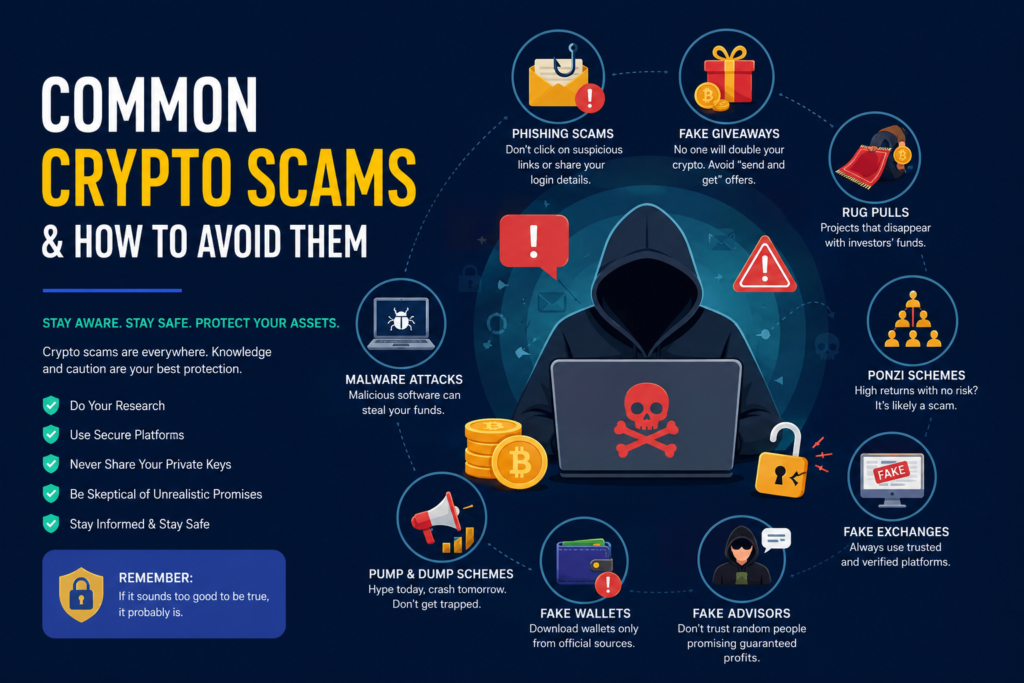
Introduction
The cryptocurrency industry has transformed the way people invest, trade, and transfer money. With the rise of digital assets such as Bitcoin, Ethereum, and thousands of other cryptocurrencies, millions of investors have entered the market seeking financial opportunities. However, alongside innovation and growth, crypto scams have become increasingly sophisticated, costing victims billions of dollars every year.
Unlike traditional banking systems, cryptocurrency transactions are generally irreversible. Once funds are sent to a scammer’s wallet, recovering them is extremely difficult. This makes awareness and prevention essential for every crypto user.
This guide explains the most common crypto scams, how they work, warning signs to watch for, and practical steps to protect your digital assets.https://bestreview.id/2026/05/22/cooljumper-wireless-earbuds-review-affordable-sports-earbuds-with-impressive-battery-life/
Why Crypto Scams Are So Common
Cryptocurrencies operate in a decentralized environment where transactions occur without traditional financial intermediaries. While this offers privacy and freedom, it also attracts cybercriminals who exploit inexperienced users.
Several factors contribute to the rise of crypto fraud:
- Limited regulation in certain jurisdictions
- Irreversible blockchain transactions
- Growing popularity of digital assets
- Lack of investor education
- Anonymous wallet addresses
- Rapid emergence of new projects and tokens
Understanding common scam techniques is the first step toward staying safe.
1. Phishing Scams
What Is a Phishing Scam?
Phishing is one of the most widespread crypto scams. Attackers create fake websites, emails, or messages that imitate legitimate cryptocurrency exchanges, wallets, or platforms.
The goal is to trick users into revealing:
- Login credentials
- Wallet passwords
- Recovery phrases (seed phrases)
- Private keys
- Two-factor authentication codes
Once scammers gain access, they can transfer all funds from the victim’s wallet.
Example
A user receives an email claiming to be from a crypto exchange, warning that their account will be suspended unless they verify their identity. The email contains a fake login link designed to steal credentials.
How to Avoid Phishing
- Always verify website URLs carefully
- Bookmark official exchange websites
- Never click suspicious email links
- Enable two-factor authentication (2FA)
- Never share your recovery phrase
- Use reputable antivirus software
2. Fake Giveaways and Social Media Scams
How the Scam Works
Fraudsters often impersonate celebrities, influencers, crypto companies, or well-known figures on social media platforms.
They typically promise:
- Free cryptocurrency
- Double-your-money promotions
- Limited-time giveaways
- Exclusive rewards
Victims are instructed to send cryptocurrency first to receive a larger amount in return. After sending funds, nothing is returned.
Warning Signs
- “Send 1 BTC and receive 2 BTC back”
- Urgent countdown timers
- Fake celebrity endorsements
- Requests for upfront payments
Protection Tips
- Legitimate giveaways never require upfront crypto deposits
- Verify accounts using official company websites
- Ignore unrealistic profit promises
- Report suspicious social media posts
3. Rug Pull Scams
What Is a Rug Pull?
A rug pull occurs when developers create a cryptocurrency project, attract investors, and then suddenly disappear with investor funds.
These scams are especially common in decentralized finance (DeFi) and newly launched meme coins.
Common Characteristics
- Anonymous development teams
- No independent audits
- Unrealistic returns
- Aggressive social media marketing
- Lack of transparent documentation
- https://afmnews.net/yield-farming-vs-staking-which-crypto-passive-income-strategy-is-better-in-2026/
How Investors Get Trapped
Developers promote a token heavily, causing investors to buy. Once enough money enters the project, developers remove liquidity or sell their holdings, causing the token price to collapse.
How to Avoid Rug Pulls
- Research project teams thoroughly
- Review token audits
- Examine liquidity lock status
- Read the project’s whitepaper
- Avoid investing based solely on hype
4. Ponzi and Pyramid Schemes
Understanding the Scam
Ponzi schemes pay existing investors using money from new participants rather than genuine business profits.
These schemes often advertise:
- Guaranteed returns
- Daily income opportunities
- Risk-free investments
- Passive earnings programs
As long as new investors join, payouts continue. Eventually, recruitment slows, and the scheme collapses.
Red Flags
- Guaranteed profits
- Consistent high returns regardless of market conditions
- Strong emphasis on recruiting others
- Lack of transparency
Prevention
- Question any guaranteed investment returns
- Research company registration and legitimacy
- Understand how profits are generated
- Consult independent reviews before investing
5. Fake Cryptocurrency Exchanges
What Are Fake Exchanges?
Scammers create counterfeit cryptocurrency exchanges that appear professional and trustworthy.
Users deposit funds and may even see fake profits displayed in their accounts. However, when attempting withdrawals, they encounter:
- Unexpected fees
- Verification requirements
- Account restrictions
- Complete loss of access
Warning Signs
- Recently created websites
- Limited online reputation
- No regulatory information
- Unusually attractive bonuses
Staying Safe
- Use established exchanges
- Research reviews from multiple sources
- Verify licensing where applicable
- Test small withdrawals before depositing large amounts
6. Fake Investment Advisors and Influencers
The Growing Threat
Many scammers pose as experienced traders, financial experts, or crypto mentors. They contact victims through:
- Telegram groups
- WhatsApp messages
- Social media platforms
- Dating applications
They often claim insider knowledge of profitable investments.
Common Tactics
- Showing fake profit screenshots
- Displaying luxury lifestyles
- Offering exclusive trading signals
- Requesting direct transfers
Protection Measures
- Verify credentials independently
- Avoid sending funds to individuals
- Ignore unsolicited investment advice
- Use regulated platforms whenever possible
7. Malware and Wallet Drainer Attacks
What Is Crypto Malware?
Cybercriminals distribute malicious software designed to steal cryptocurrency information.
Examples include:
- Keyloggers
- Clipboard hijackers
- Wallet drainers
- Trojan applications
Some malware automatically replaces copied wallet addresses with scammer-controlled addresses during transactions.
Prevention Tips
- Download software only from official sources
- Keep operating systems updated
- Use hardware wallets for large holdings
- Scan devices regularly for malware
- Verify wallet addresses before sending funds
8. Pump-and-Dump Schemes
How Pump-and-Dump Operations Work
Organized groups artificially inflate the price of low-value cryptocurrencies through coordinated buying and promotion.
Once the price rises significantly:
- Organizers sell their holdings.
- The market crashes.
- Ordinary investors suffer losses.
Typical Signs
- Sudden hype around obscure tokens
- Claims of guaranteed price increases
- Secret trading groups
- Artificial urgency
How to Stay Safe
- Avoid investment decisions based on social media hype
- Conduct independent research
- Focus on projects with strong fundamentals
- Be skeptical of guaranteed profits
9. Fake Wallet Applications
The Risk
Scammers publish counterfeit wallet applications that closely resemble legitimate crypto wallets.
After installation, users may unknowingly provide:
- Recovery phrases
- Private keys
- Passwords
Scammers then gain complete control over funds.
Safety Recommendations
- Download wallets only from official websites
- Verify publisher information
- Read genuine user reviews
- Enable additional security features
Essential Crypto Security Best Practices
Regardless of the specific scam type, following strong security habits significantly reduces risk.
Protect Your Seed Phrase
Your recovery phrase is the master key to your wallet. Never:
- Share it with anyone
- Store it in screenshots
- Send it through email or messaging apps
Use Hardware Wallets
Hardware wallets keep private keys offline, reducing exposure to hackers.
Enable Two-Factor Authentication
2FA provides an extra layer of account protection even if passwords become compromised.
Verify Every Transaction
Always double-check:
- Wallet addresses
- Network selections
- Transaction amounts
Stay Educated
Crypto scams evolve continuously. Following trusted industry news and security updates helps identify emerging threats.
What To Do If You Become a Victim
If you suspect you’ve been scammed:
- Immediately secure remaining assets.
- Change passwords and enable stronger authentication.
- Contact the exchange or service provider involved.
- Report the incident to relevant authorities.
- Document wallet addresses and transaction details.
- Warn others in the community.
Although recovering stolen cryptocurrency can be difficult, prompt action may prevent further losses.
Conclusion
Cryptocurrency offers exciting opportunities for investors, traders, and technology enthusiasts, but it also attracts scammers looking to exploit unsuspecting users. Phishing attacks, rug pulls, fake giveaways, Ponzi schemes, fraudulent exchanges, and wallet-draining malware remain among the most common threats in the crypto ecosystem.
The best defense is a combination of education, skepticism, and strong security practices. Always research projects thoroughly, verify sources, protect private keys, and avoid offers that seem too good to be true.
By understanding how crypto scams operate and implementing proper security measures, investors can confidently navigate the digital asset market while minimizing risks and protecting their hard-earned funds.