

Introduction
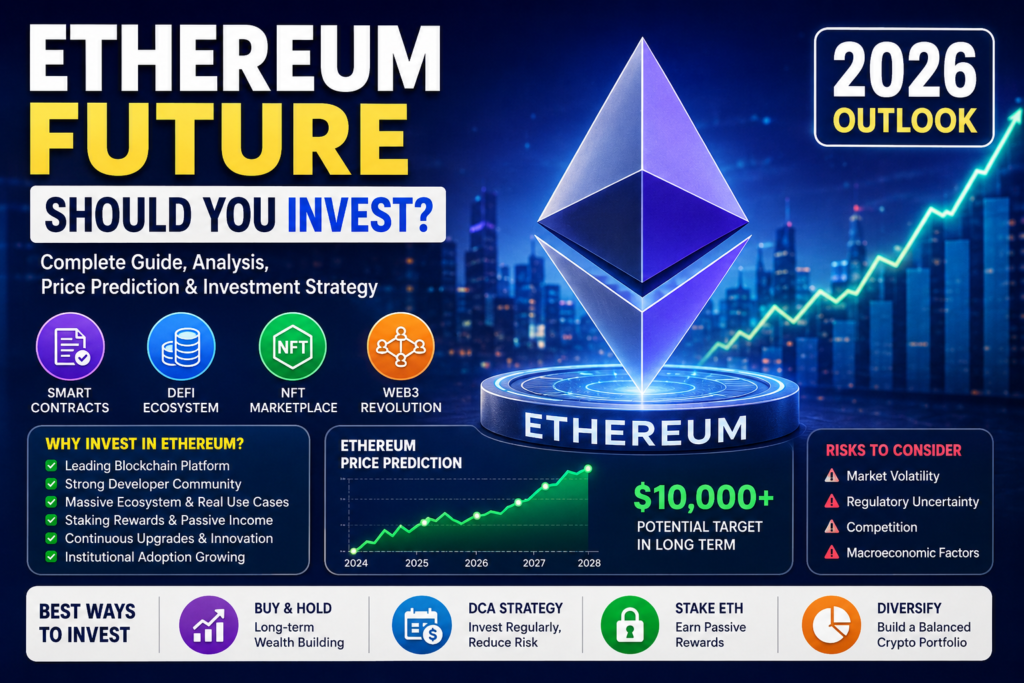
Ethereum remains one of the most searched and discussed cryptocurrencies in the digital asset market. Since its launch in 2015, Ethereum has transformed from a simple blockchain platform into the foundation of decentralized finance (DeFi), non-fungible tokens (NFTs), Web3 applications, and smart contracts. As investors look toward the future, one question dominates search engines worldwide: Should you invest in Ethereum in 2026?
With continuous technological upgrades, increasing institutional adoption, and growing blockchain innovation, Ethereum continues to attract both beginner and professional investors. This article explores Ethereum’s future potential, price predictions, investment opportunities, risks, and whether ETH deserves a place in your crypto portfolio.
https://afmnews.net/what-is-real-world-asset-rwa-in-crypto-complete-beginners-guide/
What Is Ethereum?
Ethereum is a decentralized blockchain platform that enables developers to build and deploy smart contracts and decentralized applications (dApps). Unlike Bitcoin, which primarily serves as digital money, Ethereum acts as a programmable blockchain ecosystem.
Key Features of Ethereum
- Smart Contracts
- Decentralized Applications (dApps)
- Decentralized Finance (DeFi)
- NFT Marketplace Support
- Layer-2 Scaling Solutions
- Ethereum Virtual Machine (EVM)
- Proof-of-Stake (PoS) Consensus
The native cryptocurrency of the network is Ether (ETH), which is used to pay transaction fees and secure the blockchain.
Why Ethereum Remains a Leading Cryptocurrency
Ethereum consistently ranks among the top cryptocurrencies by market capitalization. Several factors contribute to its long-term strength.
1. Smart Contract Dominance
Ethereum pioneered smart contract technology, allowing developers to create automated agreements without intermediaries. Thousands of blockchain projects continue to build on Ethereum.
2. Strong Developer Ecosystem
Ethereum has one of the largest developer communities in the cryptocurrency industry. Continuous innovation strengthens the network and expands real-world use cases.
3. Institutional Interest
Major financial institutions, investment funds, and technology companies continue to explore Ethereum-based solutions. Institutional adoption often increases long-term confidence among investors.
4. DeFi Leadership
Most decentralized finance protocols operate on Ethereum. Billions of dollars remain locked in Ethereum-based lending, staking, and trading platforms.https://bestreview.id/2026/05/17/hybrid-active-noise-cancelling-wireless-earbuds-review-80-hours-playtime-bluetooth-earphones/
Ethereum Price History and Performance
Ethereum has experienced significant growth since its inception.
| Year | Approximate Price Range |
|---|---|
| 2015 | Under $1 |
| 2017 Bull Market | Over $1,400 |
| 2018 Bear Market | Below $100 |
| 2021 Bull Run | Above $4,800 |
| 2022-2023 Correction | Significant decline |
| 2024-2026 Recovery | Continued institutional growth |
Despite periods of volatility, Ethereum has consistently recovered and maintained its position as the second-largest cryptocurrency.
Ethereum Future Predictions for 2026 and Beyond
Growing Adoption of Blockchain Technology
Businesses increasingly integrate blockchain solutions into finance, supply chain management, gaming, healthcare, and digital identity systems. Ethereum remains the preferred blockchain for many enterprise applications.
Expansion of Web3
Web3 aims to create a decentralized internet where users control their data and digital assets. Ethereum serves as the backbone of many Web3 projects, creating strong future demand for ETH.
Increased Staking Participation
Ethereum’s Proof-of-Stake system allows users to earn rewards by staking ETH. As staking adoption grows, circulating supply may decrease, potentially supporting higher prices.
Layer-2 Scaling Improvements
Networks such as Arbitrum, Optimism, Base, and zkSync reduce transaction costs and increase scalability. These solutions help Ethereum process more transactions efficiently.
ETF and Institutional Investment Growth
The introduction of Ethereum ETFs and regulated investment products has increased institutional exposure. More capital entering the ecosystem could positively impact long-term prices.
Bullish Factors Supporting Ethereum Investment
Strong Network Security
Ethereum’s decentralized validator network enhances security and resistance to attacks.
Deflationary Tokenomics
Ethereum’s fee-burning mechanism can reduce overall ETH supply, creating scarcity over time.
Continuous Innovation
Developers regularly improve Ethereum through network upgrades that enhance efficiency, scalability, and usability.
Massive Ecosystem
Ethereum supports:
- Decentralized Exchanges (DEXs)
- NFT Platforms
- Blockchain Gaming
- Metaverse Projects
- Stablecoins
- Enterprise Blockchain Solutions
This broad ecosystem creates sustained demand for ETH.
Risks of Investing in Ethereum
While Ethereum offers substantial opportunities, investors should understand the associated risks.
Market Volatility
Cryptocurrency markets are highly volatile. Ethereum prices can rise or fall dramatically within short periods.
Regulatory Uncertainty
Governments worldwide continue developing cryptocurrency regulations. Regulatory changes may affect market sentiment and adoption.
Competition from Other Blockchains
Competitors such as:
- Solana
- Avalanche
- Cardano
- Sui
- Aptos
- BNB Chain
continue to attract developers and users.
Economic Conditions
Interest rates, inflation, and global economic uncertainty can influence investor demand for risk assets, including cryptocurrencies.
Should Beginners Invest in Ethereum?
Ethereum is often considered one of the most beginner-friendly cryptocurrency investments because:
- It has a long operating history.
- Strong developer support exists.
- Institutional investors recognize it.
- Multiple real-world applications continue growing.
- Extensive educational resources are available.
For beginners, dollar-cost averaging (DCA) can reduce the impact of short-term market volatility by investing fixed amounts over time.
Ethereum vs Bitcoin: Which Is Better?
Ethereum
Advantages:
- Smart contract functionality
- DeFi ecosystem
- NFT infrastructure
- Staking rewards
- Web3 development platform
Bitcoin
Advantages:
- Strong store-of-value narrative
- Limited supply of 21 million coins
- Highest cryptocurrency adoption
- Greater institutional recognition
Many investors choose to hold both Bitcoin and Ethereum for diversification.
Expert Outlook on Ethereum’s Long-Term Potential
Many analysts believe Ethereum could remain a dominant blockchain platform throughout the next decade. The combination of:
- Smart contracts
- Decentralized finance
- Institutional adoption
- Layer-2 scaling
- Proof-of-Stake efficiency
- Web3 expansion
creates a compelling long-term investment case.
Although short-term price fluctuations are inevitable, Ethereum’s underlying technology and ecosystem growth continue attracting global investors.
Best Strategies for Investing in Ethereum
Long-Term Holding (HODL)
Buy ETH and hold for multiple years while benefiting from long-term adoption trends.
Dollar-Cost Averaging (DCA)
Invest a fixed amount weekly or monthly regardless of market conditions.
Staking Ethereum
Earn passive income by participating in Ethereum’s staking system.
Portfolio Diversification
Avoid investing all capital in a single asset. Combine Ethereum with Bitcoin and other investments for risk management.http://Sign up on the world’s largest crypto exchange platform. https://www.binance.com/register?ref=TNR0U0QH&utm_medium=app_share_link_whatsapp
Final Verdict: Should You Invest in Ethereum?
Ethereum remains one of the strongest cryptocurrency investments available in 2026. Its leadership in smart contracts, decentralized finance, Web3 applications, and blockchain innovation positions it for continued growth. While market volatility and regulatory uncertainty remain important considerations, Ethereum’s expanding ecosystem and institutional support provide strong long-term fundamentals.
For investors seeking exposure to the future of blockchain technology, decentralized finance, and digital innovation, Ethereum continues to be a compelling investment opportunity. However, every investor should conduct independent research, understand the risks involved, and invest only what they can afford to lose.