

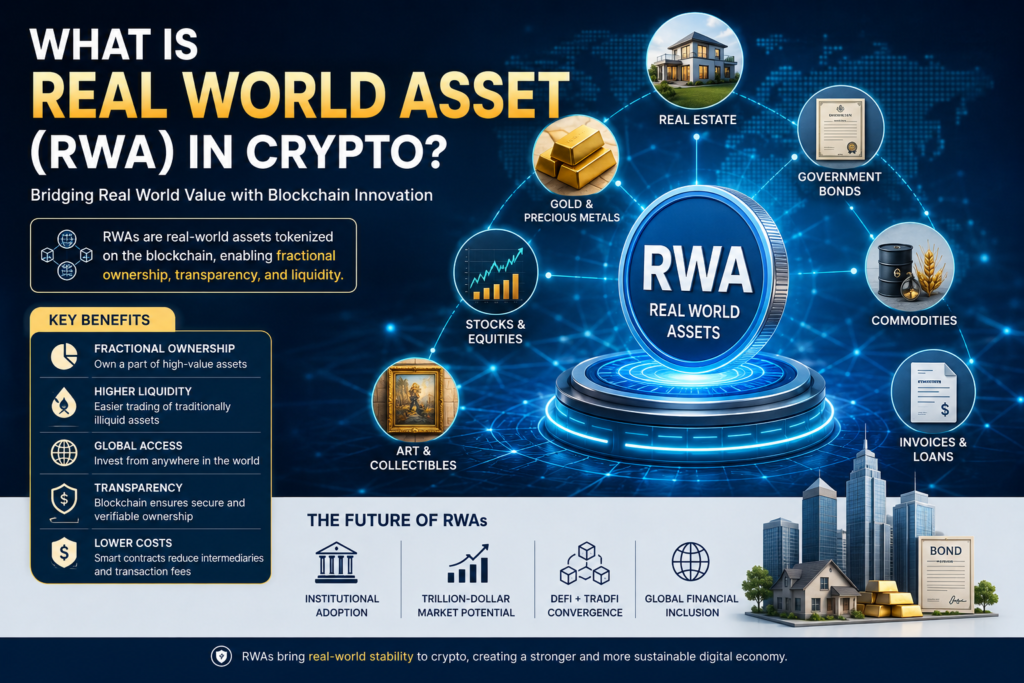
The cryptocurrency industry is evolving rapidly, and one of the biggest trends reshaping blockchain technology is Real World Assets (RWA) in crypto. From real estate and gold to government bonds and invoices, physical and traditional financial assets are now entering the blockchain ecosystem. This innovation is bridging the gap between decentralized finance (DeFi) and traditional finance (TradFi).
In recent years, RWAs have become one of the most discussed sectors in the crypto market because they bring real utility, stability, and institutional adoption to blockchain technology. Investors are increasingly searching for safer and more asset-backed opportunities compared to highly volatile meme coins or speculative tokens.
In this blog, you will learn what Real World Assets are, how RWA tokenization works, their benefits, risks, top RWA crypto projects, and why RWAs could become the future of decentralized finance.
https://afmnews.net/best-ai-crypto-coins-2026-top-trending-ai-tokens-with-massive-future-potential/
What Are Real World Assets (RWA) in Crypto?
Real World Assets (RWAs) are physical or traditional financial assets that are represented digitally on a blockchain through tokenization. These assets exist in the real world but can be traded, owned, or transferred using blockchain technology.
Examples of RWAs include:
- Real estate properties
- Gold and precious metals
- Government bonds
- Stocks and equities
- Treasury bills
- Art and collectibles
- Carbon credits
- Commodities
- Invoices and loans
When these assets are tokenized, ownership rights are converted into digital tokens that can be bought, sold, or traded on crypto platforms.
For example, instead of purchasing an entire building, investors can buy fractional ownership through blockchain-based tokens. This makes investing more accessible, transparent, and efficient.
How Does RWA Tokenization Work?
RWA tokenization is the process of converting ownership rights of a physical asset into blockchain-based digital tokens.
The process generally includes the following steps:
1. Asset Selection
A real-world asset is identified, such as a property, gold reserve, or government bond.
2. Legal Structuring
The asset ownership is legally verified and structured to ensure compliance with regulations.
3. Token Creation
Blockchain-based tokens are created to represent ownership shares of the asset.
4. Smart Contracts
Smart contracts automate transactions, dividend distribution, and ownership transfers.
5. Trading and Investment
The tokenized asset becomes available for investors on crypto exchanges or DeFi platforms.
This process increases liquidity and allows global participation in traditionally illiquid markets.
Why RWAs Are Important in Crypto
The crypto market has long been criticized for lacking real-world value. Many digital assets are purely speculative. RWAs solve this problem by connecting blockchain technology with tangible assets that already have established value.
Here are the major reasons why RWAs are gaining popularity:
Increased Stability
Asset-backed tokens are generally less volatile compared to traditional cryptocurrencies because they are linked to real assets.
Institutional Adoption
Large financial institutions are exploring RWA tokenization to modernize traditional finance systems.
Better Liquidity
Assets like real estate or fine art are difficult to trade traditionally. Tokenization allows fractional ownership and easier trading.
Global Accessibility
Investors from anywhere in the world can access high-value assets with smaller investment amounts.
Transparency
Blockchain technology provides transparent ownership records and transaction histories.
Types of Real World Assets in Crypto
The RWA sector includes various asset categories that are being integrated into blockchain ecosystems.
Real Estate Tokenization
Real estate is one of the fastest-growing RWA sectors. Investors can purchase fractional ownership of properties through blockchain tokens.
Benefits include:
- Lower investment barriers
- Passive income opportunities
- Increased property liquidity
- Faster transactions
Real estate tokenization is becoming popular in both residential and commercial property markets.
Tokenized Gold and Commodities
Gold-backed cryptocurrencies allow investors to own digital tokens backed by physical gold reserves.
Popular benefits include:
- Safe-haven investment
- Easier storage and transfer
- Fractional ownership
- Reduced transaction costs
Tokenized commodities are attracting investors who want blockchain convenience with traditional asset security.
Government Bonds and Treasury Bills
Blockchain platforms are increasingly tokenizing government debt instruments such as treasury bills.
This sector is particularly attractive because treasury-backed assets are considered lower risk compared to volatile cryptocurrencies.
Institutional investors are showing growing interest in tokenized treasuries due to their predictable yields and blockchain efficiency.
Tokenized Stocks and Equities
Traditional equities can also be represented on blockchain networks.
Benefits include:
- 24/7 trading access
- Faster settlements
- Lower brokerage fees
- Fractional investing
This innovation could eventually reshape global stock markets.
Benefits of Real World Assets (RWA) in Crypto
RWAs bring several advantages to both crypto investors and traditional financial institutions.
1. Fractional Ownership
Investors can buy small portions of expensive assets like buildings or artwork.
2. Enhanced Liquidity
Traditionally illiquid assets become easier to trade through blockchain marketplaces.
3. Faster Transactions
Blockchain reduces paperwork and settlement times.
4. Reduced Costs
Smart contracts minimize intermediaries and transaction fees.
5. Diversification
Crypto investors can diversify into real-world investments without leaving blockchain ecosystems.
6. Improved Transparency
Blockchain records provide immutable transaction histories.
Risks and Challenges of RWAs
Although RWAs have huge potential, there are still several risks involved.
Regulatory Uncertainty
Governments are still developing regulations for tokenized assets and digital securities.
Custody Risks
Physical assets must be securely stored and audited to maintain trust.
Smart Contract Vulnerabilities
Blockchain-based systems may face hacking or coding risks.
Legal Complexity
Ownership rights and jurisdiction issues can become complicated internationally.
Market Adoption
Mass adoption still depends on institutional participation and regulatory clarity.
Despite these challenges, the RWA sector continues to grow rapidly.
Top RWA Crypto Projects in 2026
Several blockchain projects are leading the Real World Asset revolution.
MakerDAO
MakerDAO has expanded into tokenized treasury investments and real-world lending opportunities.
Chainlink
Chainlink provides essential oracle infrastructure for connecting real-world data with blockchain networks.
Ondo Finance
Ondo Finance focuses on tokenized US Treasuries and institutional-grade financial products.
Centrifuge
Centrifuge enables businesses to tokenize invoices and real-world credit assets.
Polymesh
Polymesh is designed specifically for regulated asset tokenization and security tokens.
These projects are helping bridge decentralized finance with traditional financial systems.
The Future of RWAs in Crypto
The future of Real World Assets in crypto looks extremely promising. Many analysts believe RWA tokenization could become a multi-trillion-dollar market over the next decade.
Major financial institutions, including banks and investment firms, are exploring blockchain-based asset tokenization. Governments are also beginning to recognize the efficiency benefits of blockchain settlement systems.
Future trends may include:
- Tokenized real estate becoming mainstream
- Digital government bonds on blockchain
- Blockchain-powered stock exchanges
- Institutional DeFi adoption
- Increased cross-border investments
As blockchain infrastructure improves, RWAs could become one of the strongest foundations for long-term crypto growth.
Are RWAs a Good Investment?
RWAs may offer a balanced investment opportunity for crypto investors seeking lower volatility and real-world backing.
Potential advantages include:
- Exposure to tangible assets
- Stable yield opportunities
- Reduced crypto market volatility
- Long-term growth potential
However, investors should still conduct proper research before investing in any RWA project.
Factors to consider include:
- Regulatory compliance
- Asset backing transparency
- Security measures
- Liquidity availability
- Platform reputation
Like all investments, RWAs carry both opportunities and risks.
https://bestreview.id/2026/05/14/rgb-gaming-mouse-pad-review-is-it-worth-buying/
Final Thoughts
Real World Assets (RWA) in crypto represent one of the most important developments in blockchain technology. By bringing traditional assets onto decentralized networks, RWAs combine the efficiency of blockchain with the stability of real-world value.
From real estate and gold to treasury bonds and tokenized stocks, RWAs are unlocking new investment possibilities for both retail and institutional investors.
As the crypto industry matures, RWA tokenization could become a major driver of mass blockchain adoption. Investors looking for long-term utility-focused crypto sectors should closely watch the growth of Real World Assets in the coming years.