

Introduction to Polkadot (DOT)
Polkadot (DOT) is a next-generation blockchain platform designed to solve one of the biggest problems in crypto: blockchain isolation. While many blockchains operate independently, Polkadot allows different blockchains to communicate, share data, and work together securely. This makes Polkadot a strong contender for the future of Web3 and decentralized technology.
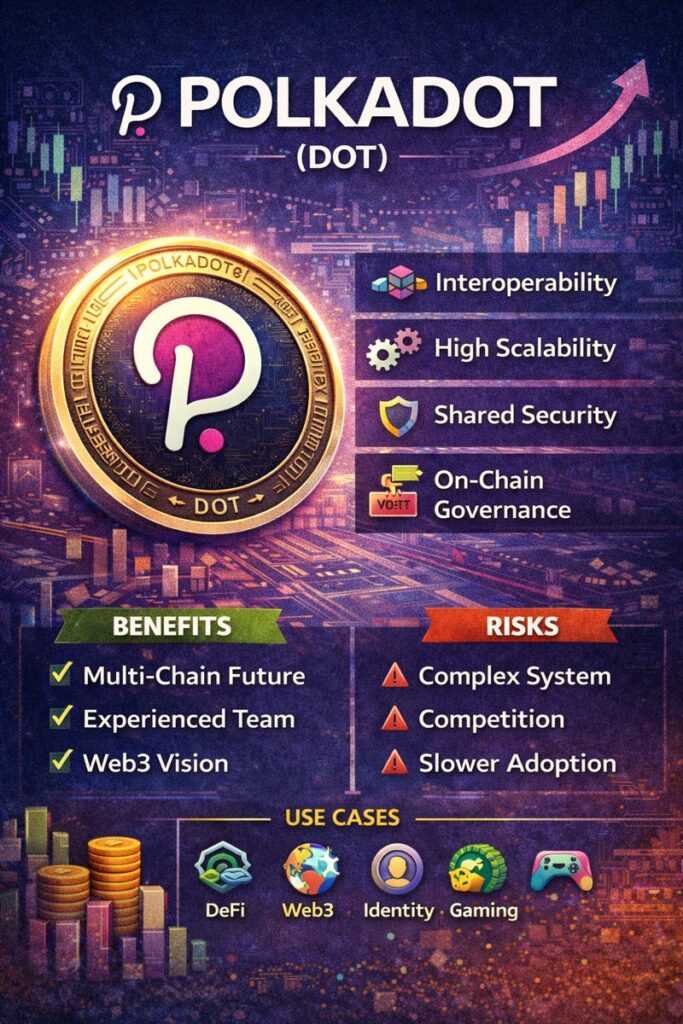
What Is Polkadot (DOT)?
Polkadot is a multi-chain blockchain network created to enable interoperability between different blockchains. It was founded by Dr. Gavin Wood, one of the co-founders of Ethereum.
The native cryptocurrency of the Polkadot network is DOT, which is used for:
- Network governance
- Staking and securing the network
- Bonding to connect new blockchains (parachains)
How Polkadot Works
Polkadot’s architecture is different from traditional blockchains. It is made up of three main components:
1. Relay Chain
The core of the Polkadot network responsible for security, consensus, and cross-chain communication.
2. Parachains
Independent blockchains that run parallel to the relay chain and are customized for specific use cases.
3. Bridges
These connect Polkadot to external blockchains like Ethereum and Bitcoin.
This design allows Polkadot to achieve high scalability, flexibility, and security.
Key Features of Polkadot
1. Interoperability
Different blockchains can exchange data and assets without intermediaries.
2. High Scalability
Multiple parachains process transactions simultaneously, increasing overall speed.
3. Shared Security
All parachains benefit from Polkadot’s main security system.
4. On-Chain Governance
DOT holders can vote on upgrades and changes without hard forks.
5. Upgradeable Network
Polkadot can upgrade itself without disrupting the network.
Use Cases of Polkadot
- Cross-chain DeFi applications
- Web3 infrastructure projects
- Enterprise blockchain solutions
- Identity and data-sharing platforms
- Gaming and NFT ecosystems
Benefits of Investing in Polkadot (DOT)
- Strong technical foundation
- Experienced development team
- Long-term vision for Web3
- Active developer community
- Supports future blockchain innovation
These strengths make DOT attractive for long-term investors.
Risks and Drawbacks of Polkadot
1. Complex Ecosystem
Polkadot can be difficult for beginners to fully understand.
2. Competition
Faces strong competition from Ethereum, Cosmos, and other interoperability projects.
3. Slower Adoption
Some projects take time to build and gain users.
4. Market Volatility
DOT prices can fluctuate sharply like other cryptocurrencies.
Is Polkadot Good for Long-Term Holding?
Polkadot is considered a strong long-term investment for investors who believe in:
- Multi-chain blockchain future
- Interoperability as a key technology
- Web3 growth
For beginners, DOT is best held as part of a diversified portfolio, alongside Bitcoin and Ethereum.
Polkadot vs Other Blockchains (Quick View)
| Feature | Polkadot | Ethereum |
|---|---|---|
| Interoperability | High | Limited |
| Scalability | High | Improving |
| Security | Shared | Independent |
| Complexity | High | Medium |
Tips for Investing in DOT
- Learn how staking works on Polkadot
- Avoid short-term speculation
- Follow parachain developments
- Use secure wallets
- Think long-term
Future Outlook of Polkadot
Polkadot continues to expand its ecosystem through new parachains and developer tools. As Web3 adoption grows, Polkadot’s ability to connect multiple blockchains may become increasingly valuable.
Conclusion
Polkadot (DOT) is a powerful and future-focused blockchain project aimed at building a connected blockchain world. While it may not be the easiest project to understand, its strong fundamentals and innovative design make it a solid option for long-term investors.
DOT is not a quick-profit coin—but it is a serious project for the future of decentralized technology.