

Introduction: A Major Step Forward for Ripple Payments
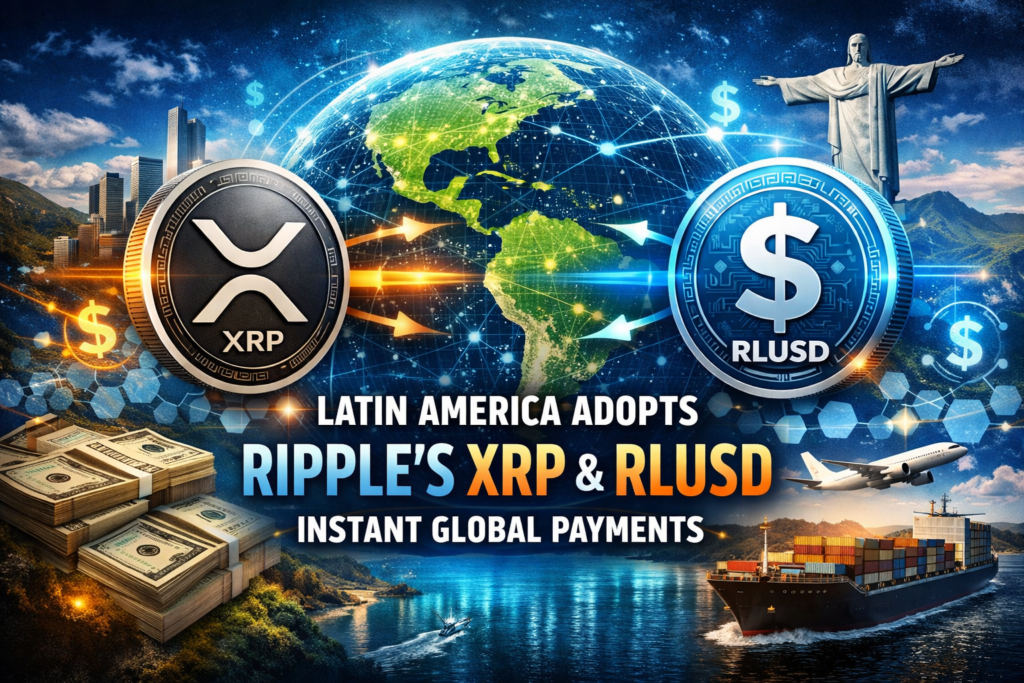
Ripple continues to expand its global footprint as a leading blockchain-based payments network. A major Latin American platform adopting XRP and RLUSD for cross-border transfers marks a strong breakthrough in the region’s fintech and crypto ecosystem. This move highlights the growing demand for fast, low-cost, transparent, and secure digital payments and signals a shift away from slow traditional banking rails toward blockchain-powered settlement.
With cross-border remittances playing a critical role in Latin America’s economy, the integration of Ripple technology could reshape how individuals and businesses move money globally.
Why Latin America Is a Key Crypto Growth Market
Latin America has become one of the fastest-growing regions for crypto adoption, blockchain payments, and digital remittances. Several factors are driving this trend:
- High remittance volumes
- Currency volatility in some countries
- Demand for faster settlement times
- Expensive traditional wire transfer fees
- Growing fintech innovation hubs
By integrating XRP liquidity and RLUSD stablecoin infrastructure, platforms can offer near-instant transfers with predictable costs — something traditional SWIFT-based systems often struggle to provide.
What XRP Brings to Cross-Border Transfers
XRP is designed specifically for real-time settlement and liquidity bridging. Unlike many cryptocurrencies, XRP focuses on payment efficiency rather than speculation alone.
Key Advantages of XRP for Global Transfers:
- ⚡ Near-instant transaction settlement
- 💸 Low transaction fees
- 🌍 Borderless liquidity routing
- 🔗 Strong fintech and banking integrations
- 📉 Reduced need for pre-funded accounts
For Latin American payment corridors, XRP can significantly reduce transfer friction between local currencies and major global currencies.
RLUSD Stablecoin: Stability Meets Speed
RLUSD, Ripple’s dollar-backed stablecoin infrastructure, adds another layer of utility. Stablecoins are increasingly important in digital finance, Web3 payments, and blockchain settlement layers because they combine crypto speed with price stability.
Benefits of RLUSD in Payment Networks:
- Dollar-pegged value stability
- Ideal for business settlements
- Lower volatility risk vs traditional crypto
- Easier accounting and compliance
- Faster on-chain clearing
Together, XRP + RLUSD create a hybrid model: speed from XRP liquidity and stability from RLUSD — a powerful combination for cross-border finance.
Impact on Remittances and Business Payments
This adoption could significantly improve both consumer remittances and enterprise payment flows.
For Individuals:
- Faster family remittances
- Lower transfer costs
- Reduced dependency on intermediaries
- Better transparency and tracking
For Businesses:
- Faster supplier payments
- Improved treasury efficiency
- On-demand liquidity
- Reduced FX conversion delays
Latin American SMEs and freelancers involved in global trade may benefit strongly from this blockchain payment rail.
Ripple’s Expanding Global Ecosystem
Ripple has been steadily building partnerships across:
- Fintech companies
- Payment service providers
- Digital banks
- Remittance platforms
- Enterprise blockchain networks
The Latin American integration strengthens Ripple’s role in next-generation financial infrastructure, alongside trends like:
- Tokenized assets
- Stablecoin payments
- On-chain settlement
- Real-time treasury systems
- Blockchain interoperability
Regulatory and Compliance Considerations
Adoption of XRP and RLUSD also suggests growing comfort with regulated crypto frameworks. Platforms entering this space typically focus on:
- AML/KYC compliance
- Transparent transaction records
- Regulated stablecoin usage
- Cross-border reporting standards
Compliance-ready blockchain solutions are becoming essential for mainstream fintech adoption.
Final Thoughts: A Turning Point for Blockchain Payments in Latin America
The embrace of XRP and RLUSD by a major Latin American platform represents more than just another partnership — it signals a structural shift toward faster, cheaper, and more efficient global money movement. As blockchain payments mature, regions with high remittance demand and fintech innovation are likely to lead adoption.
If this momentum continues, Ripple’s ecosystem could become a core pillar in the future of real-time cross-border finance, stablecoin settlement, and digital payment infrastructure across emerging and developed markets alike.