

For years, the Pi Network has been the “sleeper giant” of the crypto world. Launched in 2019 by Stanford PhDs, it promised a revolution: crypto mining on your phone without the massive energy bills or expensive hardware. Fast forward to January 2026, and the project finds itself at a defining crossroads.
If you’ve been pressing that lightning bolt button for years or are considering jumping in now, here is a grounded look at the future of Pi and whether you should Hold, Buy, or Sell.
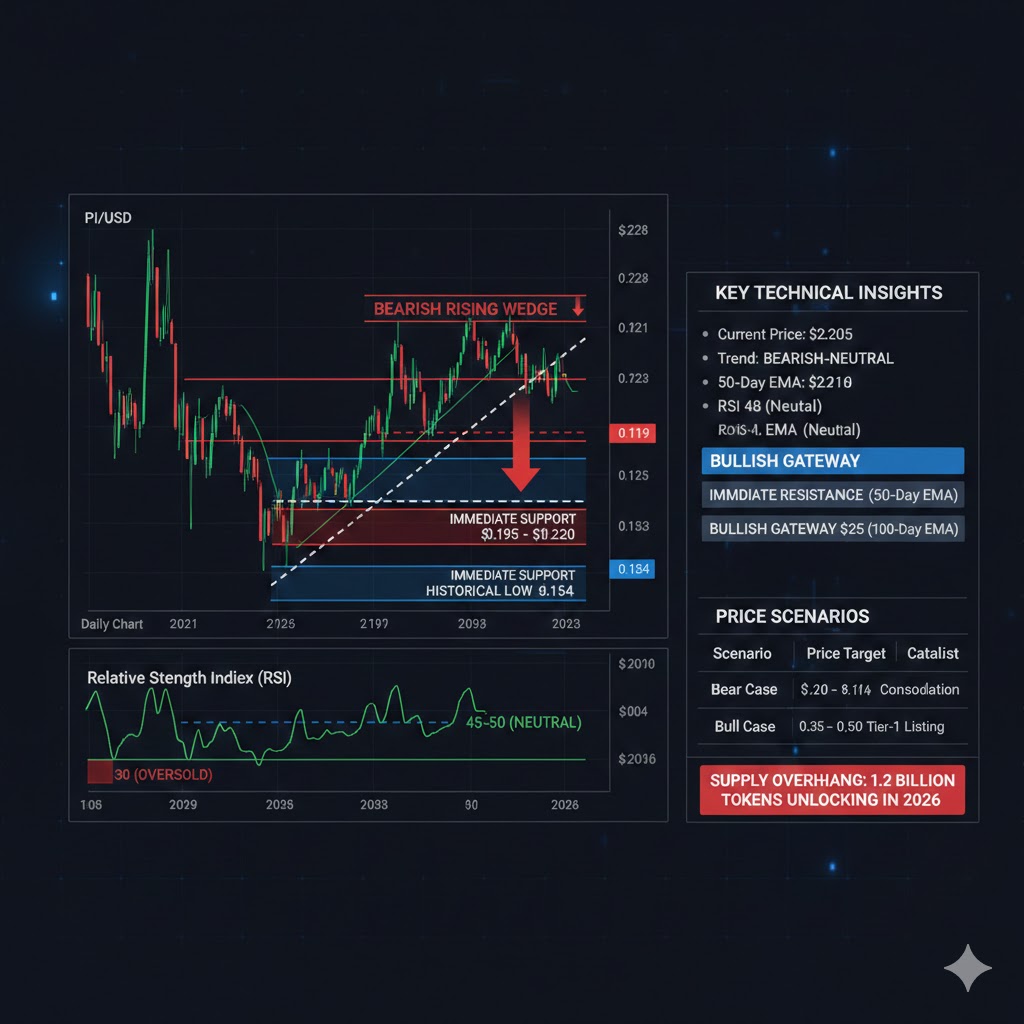
The State of the Union: Where is Pi Now?
As of early 2026, the Pi Network has moved past its “Enclosed Mainnet” phase and is finding its footing in the Open Mainnet era. However, the transition hasn’t been the explosive “moon” event many Pioneers hoped for.
- Massive User Base: With over 60 million users and roughly 17.5 million KYC-verified Pioneers, Pi has a distribution network that most altcoins would kill for.
- The Price Reality: Currently, Pi is trading in a tight range around $0.20 to $0.23. This is a far cry from the speculative IOU prices of $30+ seen years ago, but it represents the first time the coin has a real, liquid market value.
- The “Supply Overhang”: A massive 134 million token unlock scheduled for January 2026 is currently putting downward pressure on the price, as early miners finally look to cash out years of effort.
The Future: What’s Next for the “People’s Currency”?
The success of Pi in 2026 and beyond depends on one word: Utility.
1. The Ecosystem Push
The Pi Core Team is aggressively moving away from “mining” and toward “building.” With over 215 apps live—ranging from games like CiDi Games to dating platforms and local merchant tools—the goal is to make Pi a currency you actually spend rather than just trade.
2. Smart Contracts and Protocol v23
The upcoming migration to Stellar Protocol version 23 is a game-changer. It aims to bring full smart contract functionality to the Pi blockchain. If successful, this allows Pi to host DeFi protocols, DEXs (Decentralized Exchanges), and NFTs, putting it in direct competition with networks like Solana or Polygon.
3. Institutional Listings
While Pi is available on mid-tier exchanges like Bitget and MEXC, the “holy grail”—a listing on Binance or Coinbase—remains elusive due to Pi’s strict KYC and compliance requirements. A tier-1 listing would be the ultimate catalyst for a price recovery.
The Verdict: Hold, Buy, or Sell?
HOLD: For the Long-Term Believer
If you have been mining for years, selling at $0.20 might feel like a letdown.
Why Hold? The network is just now building real utility. If the smart contract migration and merchant adoption take off, $0.20 could look like a bargain in two years. If you don’t need the cash immediately, let your “free” coins sit and see if the ecosystem matures.
BUY: For the High-Risk Speculator
Buying Pi right now is a bet on the “network effect.”
Why Buy? You are buying a top-50 crypto project (by user count) at its historical floor. If Pi survives the current supply unlocks and secures a major exchange listing, a move back toward $0.50 or $1.00 by mid-2026 is a plausible “bull case” scenario.
SELL: For the Pragmatist
If you are tired of the delays and worried about the massive supply yet to be unlocked, selling a portion of your holdings is a valid move.
Why Sell? Technical indicators currently show a “bearish bias.” With over 1.2 billion tokens expected to unlock throughout 2026, the sell-side pressure is immense. Selling now locks in value before more supply hits the market.
Final Thought
Pi Network is no longer a “social experiment”—it is a functioning blockchain. Its future won’t be decided by hype, but by whether those 60 million users actually use the coin to buy coffee, play games, or trade assets.